
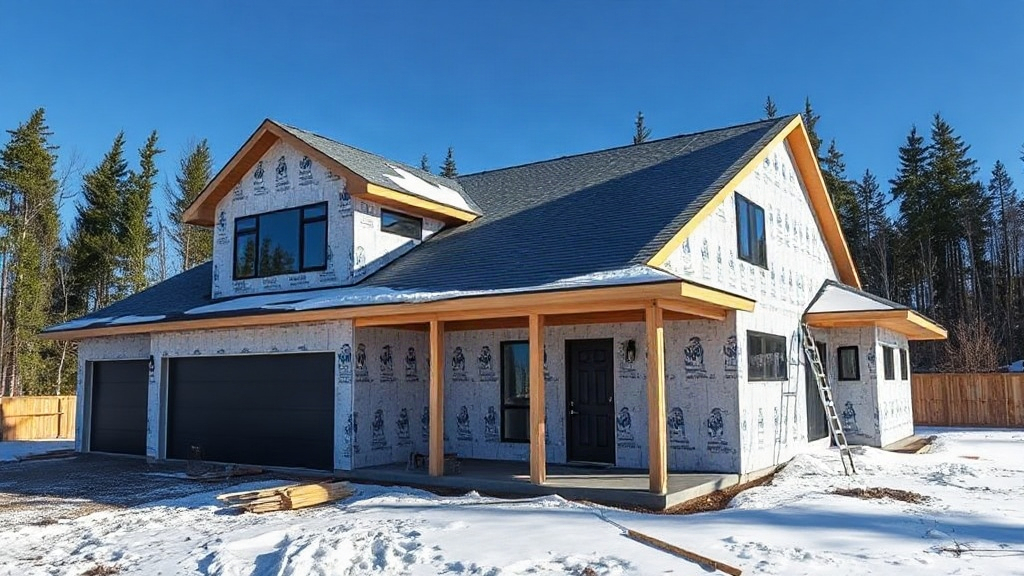
When you're building or renovating in Canada, insulation isn't just a nice-to-have; it's a critical component that keeps your home comfortable and your energy bills in check. Among the many options, expanded polystyrene (EPS) stands out for its balance of cost, performance, and versatility. But what exactly is the EPS insulation r-value, and how does it translate to real-world performance in Canadian winters? Let's break it down.
What Is EPS Insulation?
EPS, or expanded polystyrene, is a rigid foam insulation made from polystyrene beads that are expanded and fused together. It's lightweight, moisture-resistant, and often used in walls, roofs, and foundations. Unlike extruded polystyrene (XPS), EPS has a slightly lower R-value per inch but is generally more affordable and environmentally friendly due to its lack of blowing agents with high global warming potential.
Understanding R-Value and EPS
R-value measures thermal resistance: the higher the number, the better the insulation. For EPS, the R-value typically ranges from R-3.6 to R-4.2 per inch, depending on density. This means a 1-inch thick EPS board might provide around R-4, while a 2-inch board gives you R-8. But here's the catch: R-value alone doesn't tell the whole story. How insulation performs in real conditions, especially in Canada's varied climate, depends on factors like installation quality, air sealing, and moisture control.
EPS R-Value Per Inch
Standard EPS insulation has an R-value of about R-4 per inch. However, higher-density EPS (e.g., Type II) can achieve R-4.2 per inch. This is slightly lower than polyisocyanurate (R-6.5 per inch) or closed-cell spray foam (R-6.5 per inch), but EPS remains a popular choice because it's cost-effective and performs well when properly installed.
How EPS Compares to Other Insulation
- XPS: R-5 per inch, but more expensive and less eco-friendly.
- Polyiso: R-6.5 per inch, but can lose performance in cold temperatures.
- Fiberglass batts: R-3.14 per inch, but prone to air leakage if not perfectly installed.
- Mineral wool: R-3.3 per inch, good for fire resistance but heavier.
EPS offers a solid middle ground: decent R-value, low cost, and good moisture resistance.
EPS Insulation in Canadian Climates
Canada's climate zones range from mild coastal to extreme Arctic, so insulation requirements vary. In colder regions, you need a higher total R-value to prevent heat loss and condensation. EPS performs consistently in cold weather, unlike some foam insulations that lose R-value as temperatures drop. For example, polyiso can drop to R-4 per inch at -20°C, while EPS remains stable.
Building Code Requirements
The National Building Code of Canada (NBC) sets minimum R-values for different assemblies. For walls, the required effective R-value might be around R-20 in many provinces, but that's the whole assembly, not just the insulation. EPS can help you meet these targets when used in sufficient thickness. Always check local codes, as requirements vary by province and municipality.
Calculating EPS Thickness for Your Project
To determine how much EPS you need, you'll want to use an eps insulation calculator. This tool considers your climate zone, assembly type, and target R-value. Here's a simplified approach:
- Determine your target R-value (e.g., R-20 for walls).
- Subtract the R-value of other assembly components (drywall, sheathing, siding).
- Divide the remaining R-value by the EPS R-value per inch (e.g., R-4).
For example, if you need R-15 from insulation and use EPS at R-4 per inch, you'll need 3.75 inches, so you'd round up to 4 inches.
Using an EPS Insulation Calculator
Many online calculators, including those from manufacturers, can simplify this. They often account for thermal bridging and real-world performance. For accurate results, input your location, wall type, and desired energy efficiency. Remember that a eps insulation calculator is a starting point; consulting a professional ensures you meet code and performance goals.
EPS and Sandwich Panels in Canada
EPS is a core material in many sandwich panels canada wide. These panels consist of an insulating foam core (EPS, XPS, or polyurethane) sandwiched between two rigid facings (often metal or plywood). They're used for walls, roofs, and cold storage. EPS sandwich panels offer good insulation, quick installation, and cost savings. In Canada, they're popular in agricultural buildings, warehouses, and even residential construction.
Benefits of EPS Sandwich Panels
- High R-value per inch compared to other core materials.
- Lightweight, reducing structural load.
- Fast installation, saving labor costs.
- Moisture resistance, preventing mold and rot.
When choosing sandwich panels canada suppliers, look for panels with EPS cores that meet your required R-value and local building codes.
Maximizing EPS Performance
To get the most out of EPS insulation, proper installation is key. Avoid gaps and compressions, which can reduce R-value. Use tape or foam sealant at joints. In colder climates, consider adding a vapor barrier on the warm side of the insulation to prevent condensation. Also, protect EPS from UV exposure, as it can degrade over time.
Frequently Asked Questions
What is the R-value of EPS insulation per inch?
EPS typically has an R-value of R-3.6 to R-4.2 per inch, depending on density. Most common EPS boards are around R-4 per inch.
How does EPS compare to XPS in cold Canadian climates?
XPS has a higher R-value per inch (R-5) and better moisture resistance, but EPS is more affordable and environmentally friendly. Both perform well in cold, but XPS may be preferred in very wet applications.
Can I use EPS insulation below grade?
Yes, EPS can be used below grade, such as on foundation walls, but it must be protected from moisture and physical damage. Extruded polystyrene (XPS) is often preferred for below-grade due to its lower water absorption.
How do I calculate the right thickness of EPS for my home?
Use an eps insulation calculator that factors in your climate zone, assembly type, and target R-value. Alternatively, divide your target R-value by the EPS R-value per inch (e.g., R-4) to get the thickness in inches.
Are EPS sandwich panels suitable for residential homes in Canada?
Yes, EPS sandwich panels are increasingly used in residential construction for walls and roofs. They offer good insulation and fast installation, but ensure they meet local building codes and fire safety standards.