
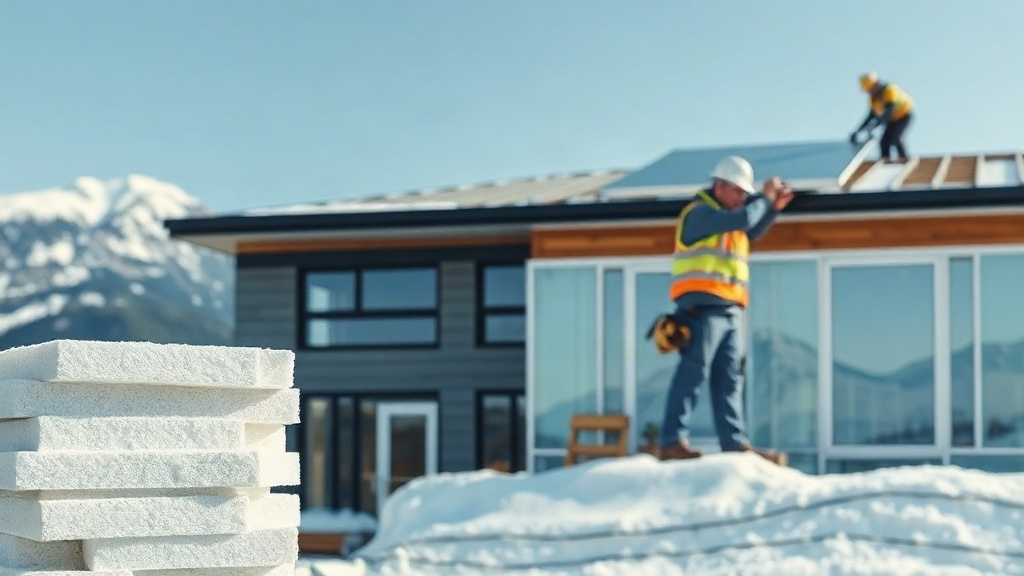
When you're planning a building project in Canada, whether it's a new home, a commercial warehouse, or an agricultural facility, choosing the right insulation system is critical. With energy costs rising and codes tightening, the decision often comes down to EPS insulation versus sandwich panels canada. Both offer excellent thermal performance, but they serve different purposes and suit different applications. In this article, we'll break down the key differences, benefits, and ideal use cases so you can make a confident choice for your build.
Understanding EPS Insulation
Expanded polystyrene (EPS) is a rigid foam insulation made from tiny polystyrene beads expanded with steam and molded into boards. It's lightweight, affordable, and boasts a consistent R-value of about R-4 per inch. EPS insulation is widely used in walls, roofs, and foundations across Canada because it resists moisture, doesn't shrink or settle, and contains no HCFCs or formaldehyde. It's also easy to cut and install, making it a favourite among DIYers and professionals alike.
Where EPS Insulation Shines
EPS is incredibly versatile. You'll find it in exterior wall sheathing, under concrete slabs, in basement walls, and even in insulated concrete forms (ICFs). Its closed-cell structure means it handles freeze-thaw cycles well, which is essential in Canadian winters. Plus, it's recyclable and often made with recycled content, appealing to eco-conscious builders.
What Are Sandwich Panels?
Sandwich panels, also known as insulated metal panels (IMPs) or structural insulated panels (SIPs), consist of an insulating core bonded between two rigid facings. The core can be EPS, polyurethane, or mineral wool, while the facings are typically metal, plywood, or oriented strand board (OSB). These panels are prefabricated and arrive on site ready to install, speeding up construction and reducing labour costs.
Types of Sandwich Panels Available in Canada
In Canada, you'll commonly encounter two main types: insulated metal panels for commercial and industrial buildings, and structural insulated panels for residential and light commercial construction. Each type offers distinct advantages, from superior fire resistance to high structural strength.
Insulated Roof Panels: The Backbone of Energy-Efficient Roofs
When it comes to roofing, insulated roof panels are a game-changer. These panels integrate insulation and roofing material into a single component, eliminating thermal bridging and reducing installation time. They're especially popular in Canada for flat and low-slope roofs on warehouses, retail stores, and even modern homes. With R-values ranging from R-10 to R-40, they keep heat in during winter and out during summer, slashing energy bills.
Why Insulated Roof Panels Excel in Canadian Climates
Canadian weather is harsh: heavy snow loads, high winds, and extreme temperature swings. Insulated roof panels are engineered to withstand these conditions. Their continuous insulation layer prevents condensation and mould, while their sturdy facings handle snow accumulation. Many panels also come with factory-applied finishes that resist UV damage and corrosion, ensuring decades of reliable performance.
EPS Insulation vs. Sandwich Panels: A Head-to-Head Comparison
So, how do you choose between EPS insulation and sandwich panels? It depends on your project's specific needs. Let's compare them across key factors.
Thermal Performance
EPS insulation offers a steady R-value of around 4 per inch, but achieving high R-values requires thicker boards. Sandwich panels, on the other hand, can pack higher R-values per inch, especially when using polyurethane or polyisocyanurate cores. For example, a 4-inch polyurethane panel can reach R-26, while 4 inches of EPS gives about R-16. However, EPS remains cost-effective for achieving moderate R-values.
Installation and Labour
EPS insulation is installed piece by piece, which can be labour-intensive. Sandwich panels arrive prefabricated, so a crew can cover large areas quickly. This speed can lead to significant savings on labour costs, particularly for large commercial projects. However, EPS offers more flexibility for complex shapes and retrofits.
Cost
EPS insulation is generally cheaper upfront, making it attractive for budget-conscious projects. Sandwich panels have a higher material cost but can reduce overall construction costs through faster installation and lower labour requirements. For insulated roof panels, the long-term energy savings often justify the initial investment.
Moisture and Durability
EPS insulation resists moisture well, but it must be properly detailed to prevent water infiltration. Sandwich panels, with their factory-sealed joints and facings, offer superior moisture protection and are less prone to installation errors. In Canada's wet and snowy climate, this can be a decisive factor.
Environmental Impact
EPS is recyclable and often contains recycled content. Sandwich panels, especially those with metal facings, are also recyclable at the end of their life. However, the production of polyurethane cores has a higher environmental footprint than EPS. If sustainability is a priority, EPS may have the edge.
Making the Right Choice for Your Canadian Project
Your decision should align with your project goals, budget, and timeline. Here are some guidelines:
- Residential retrofits or additions: EPS insulation is often the practical choice due to its affordability and ease of installation in tight spaces.
- New commercial or industrial buildings: Sandwich panels, particularly insulated metal panels, offer speed, durability, and superior thermal performance.
- Roofs: Insulated roof panels are ideal for flat or low-slope roofs where thermal bridging and moisture are concerns.
- Budget-sensitive projects: EPS provides a cost-effective way to meet code requirements without breaking the bank.
It's also worth consulting with a local insulation expert who understands Canadian building codes and climate zones. They can help you weigh the pros and cons and select the best system for your specific situation.
Frequently Asked Questions
Can I use EPS insulation in a sandwich panel?
Yes, EPS is a common core material in sandwich panels, especially for cost-sensitive applications. However, panels with EPS cores typically have lower R-values than those with polyurethane or polyisocyanurate cores, so they may need to be thicker to achieve the same thermal performance.
Are insulated roof panels worth the investment in Canada?
Absolutely. Insulated roof panels reduce energy consumption, prevent condensation, and withstand heavy snow loads. While the upfront cost is higher than traditional roofing with separate insulation, the long-term savings on heating and cooling, plus reduced maintenance, make them a smart investment for Canadian buildings.
How do sandwich panels perform in extreme cold?
Sandwich panels perform exceptionally well in cold climates. Their continuous insulation minimizes thermal bridging, and the facings protect the core from moisture and physical damage. Many panels are tested to withstand temperatures as low as -40°C, making them suitable for all Canadian regions.
Which is better for the environment: EPS or sandwich panels?
Both have environmental merits. EPS is recyclable and often made from recycled materials, while sandwich panels can be recycled at end-of-life. However, the production of some core materials, like polyurethane, has a higher carbon footprint. Ultimately, the best choice depends on your project's lifecycle and sustainability goals.
Can I install sandwich panels myself?
While some DIYers may attempt it, sandwich panel installation requires specialized tools and expertise to ensure proper sealing and structural integrity. For safety and performance, it's best to hire a professional installer, especially for roof applications where fall hazards and wind uplift are concerns.