
When you're insulating a home in Canada, the R-value of your chosen material is a number you'll see everywhere. But not all R-values are created equal, and EPS (expanded polystyrene) often gets overlooked in favor of flashier options. Yet EPS offers a reliable, cost-effective solution with a predictable eps insulation r-value that can meet even the toughest Canadian building codes. In this article, we'll break down what EPS R-value really means, how it holds up in our climate, and how to calculate exactly how much you need.
What Is EPS Insulation R-Value?
R-value measures thermal resistance: the higher the number, the better the material stops heat from escaping (or entering). For EPS, the R-value typically ranges from R-3.6 to R-4.2 per inch, depending on density and manufacturing. That might sound modest compared to polyisocyanurate (R-6 to R-6.5 per inch) or spray foam (R-6 to R-7 per inch), but EPS has distinct advantages that make it a smart choice for many Canadian projects.
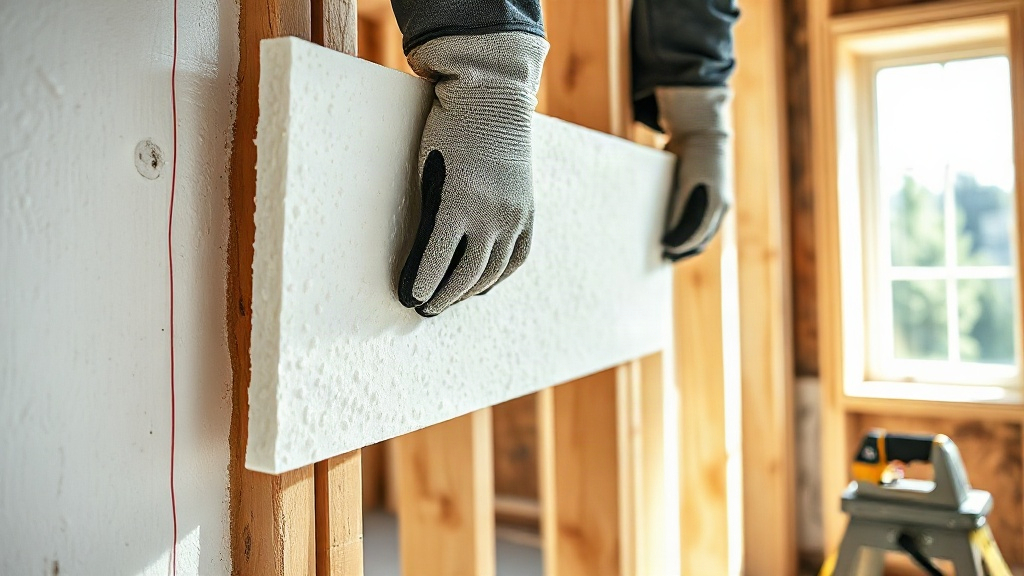
EPS is made from expanded polystyrene beads, fused together under heat and pressure. The resulting rigid foam boards are lightweight, easy to cut, and resistant to moisture. Unlike some other foams, EPS doesn't rely on blowing agents that off-gas over time, so its R-value remains stable throughout its lifespan. That means the number you see on the label is the number you get, year after year.
EPS R-Value Per Inch: A Detailed Look
The exact R-value of EPS depends on its density. Common densities are Type I (1 lb/ft³), Type II (1.5 lb/ft³), and Type III (2 lb/ft³). Here's a quick breakdown:
- Type I EPS: R-3.6 per inch
- Type II EPS: R-3.8 to R-4.0 per inch
- Type III EPS: R-4.2 per inch
For most residential applications, Type II is the sweet spot between cost and performance. But if you need higher R-value in a tight space, Type III can help. Keep in mind that R-value also depends on temperature: EPS performs slightly better in cold weather than some other foams, making it well-suited for Canadian winters.
How EPS Compares to Other Insulation Materials
To put EPS in context, here's how it stacks up against common alternatives:
- XPS (extruded polystyrene): R-5 per inch, but often uses blowing agents with higher global warming potential.
- Polyiso: R-6 per inch, but can lose R-value in extreme cold.
- Spray foam: R-6 to R-7 per inch, but more expensive and requires professional installation.
- Mineral wool: R-3.8 to R-4.2 per inch, but heavier and not moisture-resistant.
EPS holds its own, especially when you factor in cost. It's typically the most affordable rigid foam option, and its moisture resistance means it won't degrade in damp conditions. In Canada, where basements and foundations face constant moisture, that's a big deal.
Why EPS Is a Smart Choice for Canadian Climates
Canadian homes face temperature swings from +30°C in summer to -30°C in winter. EPS handles these extremes without losing performance. Its closed-cell structure resists water absorption, so it won't rot or mold. It's also freeze-thaw stable, meaning it won't crack or crumble when the ground shifts.
Another advantage: EPS is easy to work with. You can cut it with a utility knife, and it doesn't produce irritating dust like mineral wool. For DIYers, that's a welcome relief. And because it's lightweight, you don't need special fasteners or equipment.
Using an EPS Insulation Calculator to Get It Right
Determining how much EPS you need isn't guesswork. You need to know your target R-value, which depends on your climate zone and building code. In Canada, the National Energy Code for Buildings (NECB) and provincial codes set minimum R-values for walls, roofs, and foundations. For example, a typical above-ground wall in Ontario might need R-22, while a foundation might need R-15.
Once you know your target, you can use an eps insulation calculator to figure out the thickness required. The formula is simple: Target R-value ÷ R-value per inch = thickness in inches. If you're using Type II EPS (R-4 per inch) and need R-20, you'd need 5 inches of EPS. But remember to account for other insulation layers and thermal bridging.
For accurate results, use a calculator that considers your specific wall assembly, cladding, and interior finishes. Many online tools are available, or you can ask your supplier for a recommendation. EPS Insulation Canada offers a range of thicknesses to match your needs, so you can hit your target without overspending.
Installation Tips for EPS Insulation
Installing EPS correctly is crucial to achieving its rated R-value. Here are some best practices:
- Seal gaps: Use canned foam or tape to fill seams between boards. Even small gaps can reduce performance.
- Use the right fasteners: For exterior applications, use cap nails or screws with washers to secure EPS without crushing it.
- Add a weather barrier: EPS is not a water barrier, so pair it with house wrap or a drainage plane.
- Consider two layers: Installing two layers with staggered seams improves airtightness and reduces thermal bridging.
If you're unsure, consult a professional. A poorly installed job can cost you more in energy bills than you saved on materials.
Sandwich Panels Canada: Where EPS Shines
One of the fastest-growing applications for EPS is in sandwich panels canada. These prefabricated panels consist of an insulating core (often EPS) bonded between two structural skins, such as metal or oriented strand board (OSB). They're used for walls, roofs, and floors in residential, commercial, and industrial buildings.
Sandwich panels offer several benefits: they're quick to install, provide excellent insulation, and can be customized for specific R-values. In Canada, they're particularly popular for cold storage facilities, agricultural buildings, and modular homes. EPS core panels are cost-effective and perform well in our climate, making them a go-to choice for builders looking to save time and energy.
Frequently Asked Questions
What is the R-value of EPS insulation per inch?
EPS typically has an R-value of R-3.6 to R-4.2 per inch, depending on density. Type II EPS, the most common for residential use, offers about R-3.8 to R-4.0 per inch.
How does EPS compare to XPS in cold Canadian winters?
EPS and XPS have similar R-values per inch (XPS is around R-5), but EPS maintains its R-value better in cold temperatures and is more environmentally friendly because it doesn't use high-global-warming blowing agents.
Can I use EPS insulation below grade?
Yes, EPS is well-suited for below-grade applications like foundations and basements. Its closed-cell structure resists moisture absorption, and it won't degrade in damp soil. Just ensure proper drainage and protection from UV exposure.
How do I calculate how much EPS I need?
Divide your target R-value by the R-value per inch of your chosen EPS type. For example, for R-20 with Type II EPS (R-4 per inch), you need 5 inches. Use an eps insulation calculator for precise results based on your assembly.
Are sandwich panels with EPS cores suitable for Canadian climates?
Absolutely. Sandwich panels canada with EPS cores are designed to withstand Canadian weather, providing continuous insulation and reducing thermal bridging. They're commonly used in cold storage and modular construction.
Final Thoughts
EPS insulation may not have the highest R-value per inch, but it delivers reliable performance, moisture resistance, and affordability. For Canadian builders and homeowners, it's a practical choice that meets code requirements without breaking the bank. By understanding EPS R-value, using an EPS insulation calculator, and considering sandwich panels, you can make informed decisions for your next project. Whether you're renovating a basement or building a new home, EPS deserves a spot in your insulation toolkit.