
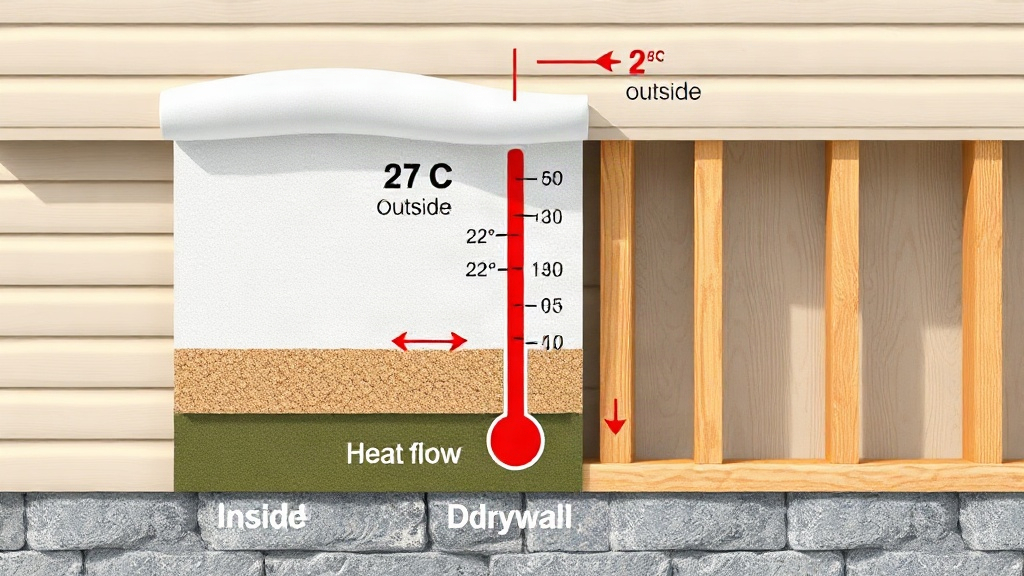
When you're insulating a home in Canada, the R-value of your chosen material can make or break your energy bills. Among the options, EPS insulation R-value stands out for its balance of performance and cost. But what exactly does that number mean, and how does it hold up in our harsh winters? This guide cuts through the jargon to give you practical, numbers-driven answers.
What Is EPS Insulation and Why Does R-Value Matter?
EPS, or expanded polystyrene, is a rigid foam board made from polystyrene beads expanded with steam. It's lightweight, moisture-resistant, and widely used in walls, roofs, and foundations. R-value measures thermal resistance: the higher the number, the better the insulation. In Canada, where temperature swings from +35°C to -40°C, every point of R-value counts toward comfort and savings.
EPS Insulation R-Value per Inch
Standard EPS typically delivers R-3.6 to R-4.2 per inch, depending on density. That means a 2-inch board gives roughly R-7.2 to R-8.4. Compare that to extruded polystyrene (XPS) at about R-5 per inch, or polyisocyanurate at R-6 to R-7. While EPS has a lower R-value per inch, it's often more affordable and environmentally friendlier due to its lack of blowing agents with high global warming potential.
How EPS Compares to Other Insulation Types
- EPS: R-3.6 to R-4.2 per inch; cost-effective, moisture-tolerant.
- XPS: R-5 per inch; higher performance but pricier and less eco-friendly.
- Polyiso: R-6 to R-7 per inch; best for space-limited applications but can lose performance in cold.
- Mineral wool: R-3.1 to R-4 per inch; fire-resistant but heavier and more expensive.
For most Canadian renovation projects, EPS offers the best bang for your buck, especially when you need to cover large areas like basement slabs or exterior walls.
Why EPS Insulation R-Value Matters in Canadian Climates
Canada's climate zones demand different insulation strategies. In Toronto (Zone 5), you might aim for R-20 in above-grade walls. In Yellowknife (Zone 8), you'd want R-30 or more. EPS's consistent performance at low temperatures is a key advantage: unlike some foam insulations that lose R-value as mercury drops, EPS remains stable. That reliability means your heating system doesn't have to work overtime during a cold snap.
Temperature Performance: EPS vs. Other Foams
Polyisocyanurate, for instance, can lose up to 20% of its R-value at -10°C. EPS, on the other hand, keeps its R-value steady. This makes it a smart choice for exterior applications where temperatures plunge. Additionally, EPS's closed-cell structure resists moisture uptake, which could otherwise degrade thermal performance over time.
How to Use an EPS Insulation Calculator
Guessing insulation thickness leads to wasted money or inadequate performance. That's where an EPS insulation calculator comes in. These tools help you determine the exact thickness needed to hit your target R-value, factoring in your climate zone, wall assembly, and local building codes.
Step-by-Step: Calculating Your EPS Needs
- Determine your target R-value: Check your provincial building code. For example, Ontario's SB-12 requires R-20 for above-grade walls in most areas.
- Choose EPS density: Higher density (e.g., 2 lb/ft³) gives slightly better R-value per inch.
- Calculate thickness: Divide target R-value by R-value per inch. For R-20 with R-4 per inch, you need 5 inches.
- Adjust for framing: If you have 2x6 framing, you might combine EPS with batt insulation to reach your goal.
- Verify with a professional: Always cross-check with a local insulation contractor to account for thermal bridging and air sealing.
Many manufacturers, including EPS Insulation Canada, offer online calculators that simplify this process. You input your wall type and desired R-value, and it spits out the recommended product thickness.
Maximizing EPS Performance: Installation Tips
Even the best insulation underperforms if installed poorly. Here's how to get the most from your EPS boards:
- Seal gaps: Use spray foam or caulk to fill seams between boards. Air leakage can reduce effective R-value by up to 20%.
- Layer strategically: For high R-values, use multiple layers with staggered joints to minimize thermal bridging.
- Protect from UV: EPS degrades in sunlight. Cover exterior applications with siding or a protective coating.
- Manage moisture: While EPS resists moisture, proper drainage and vapor barriers are still essential.
In Canada, many homeowners pair EPS with house wrap and tape the seams for a continuous insulation layer. This approach is especially effective in retrofit projects where adding exterior insulation reduces thermal bridging through studs.
EPS Insulation and Sandwich Panels in Canada
If you're considering a prefab building or cold storage, you've likely heard of sandwich panels Canada suppliers offer. These panels consist of an insulating core (often EPS) bonded between two rigid facings, such as metal or oriented strand board. They provide structure and insulation in one component, speeding up construction. EPS core sandwich panels are popular for their cost-effectiveness and decent R-value, making them a go-to for warehouses, agricultural buildings, and even modern homes.
Why Choose EPS Core Sandwich Panels?
EPS core panels offer a continuous insulation layer without thermal bridging, which can significantly improve whole-building energy performance. They're also lightweight, easy to install, and resistant to moisture. However, it's crucial to source from reputable sandwich panels Canada manufacturers that meet Canadian building codes and fire safety standards. Look for panels with a flame spread rating of 25 or less and smoke developed classification of 450 or less.
Frequently Asked Questions About EPS Insulation R-Value
What is the R-value of 1-inch EPS insulation?
One inch of standard EPS typically provides R-3.6 to R-4.2, depending on density. Higher density EPS (e.g., Type II) tends to be at the upper end of that range.
Does EPS insulation lose R-value over time?
EPS has a stable R-value over time because it doesn't rely on blowing agents that dissipate. Proper installation and moisture management ensure it maintains performance for decades.
Can I use EPS insulation below grade?
Yes, EPS is well-suited for below-grade applications like foundation walls and under slabs. Its closed-cell structure resists moisture absorption, but it should be protected from physical damage and UV exposure.
How does EPS compare to XPS in cold climates?
XPS has a higher R-value per inch (around R-5), but EPS performs more consistently at low temperatures and is often more affordable. For many Canadian projects, EPS provides better overall value.
Where can I find an EPS insulation calculator?
Many insulation suppliers, including EPS Insulation Canada, offer free online calculators. You can also use third-party tools like the ORNL Insulation Calculator, but always verify with a local expert.
Making the Right Choice for Your Canadian Home
Understanding EPS insulation R-value empowers you to make informed decisions about your insulation strategy. Whether you're renovating a basement or building a new workshop with sandwich panels Canada suppliers provide, EPS offers a reliable, cost-effective solution. Use an EPS insulation calculator to dial in the right thickness, and don't hesitate to consult a professional for tailored advice. With the right approach, you'll enjoy a warmer, more energy-efficient home for years to come.