
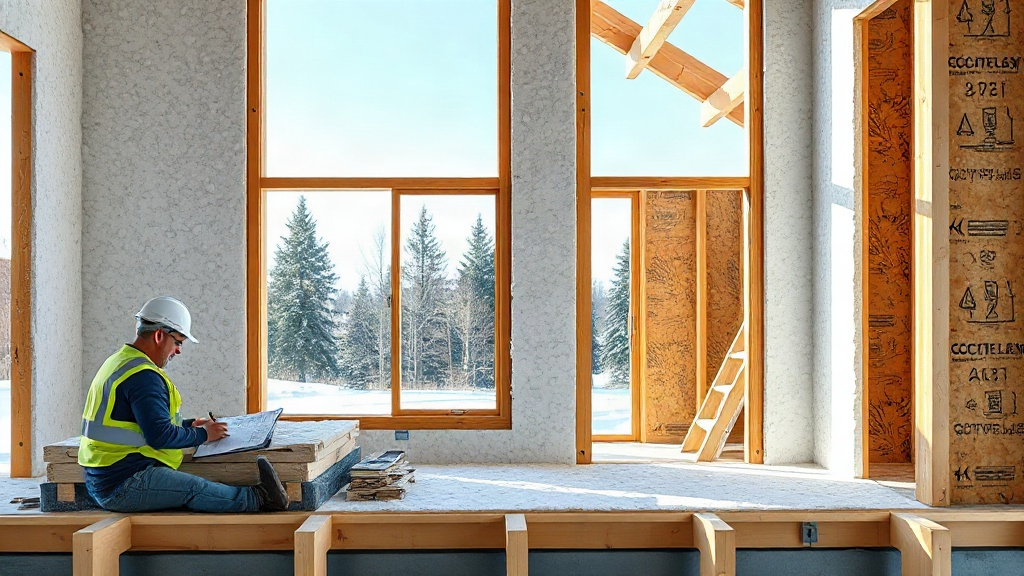
When you're insulating a home in Canada, the R-value of your chosen material is one of the most important numbers you'll encounter. If you've been researching options, you've likely come across EPS insulation R-value and wondered how it stacks up against fiberglass, XPS, or polyiso. Expanded polystyrene (EPS) offers a compelling balance of performance, cost, and environmental profile. In this guide, we'll break down what R-value really means for EPS, how it behaves in Canadian winters, and how to use an EPS insulation calculator to get the right thickness for your project.
What Is EPS Insulation R-Value?
R-value measures a material's resistance to heat flow. The higher the R-value, the better it insulates. For EPS, the R-value typically ranges from R-3.6 to R-4.2 per inch, depending on density and manufacturing standards. Most common EPS boards used in residential construction have an R-value of about R-4 per inch. That means a 2-inch thick EPS board provides roughly R-8, while a 4-inch board delivers around R-16.
It's important to note that R-value can vary slightly with temperature. EPS is known for its stable performance in cold conditions, which is a significant advantage in Canada. Unlike some materials that lose R-value as temperatures drop, EPS maintains its insulating efficiency well, making it a reliable choice for our climate.
EPS vs. Other Insulation Materials: R-Value Comparison
To put EPS in context, here's how it compares to other common insulation types on a per-inch basis:
- EPS (Expanded Polystyrene): R-3.6 to R-4.2 per inch
- XPS (Extruded Polystyrene): R-5 per inch
- Polyisocyanurate (Polyiso): R-6 to R-6.5 per inch
- Fiberglass batts: R-3.1 to R-3.4 per inch
- Mineral wool: R-3.1 to R-4.3 per inch
While XPS and polyiso offer higher R-values per inch, EPS is often more cost-effective and has a lower environmental impact. EPS contains no ozone-depleting blowing agents and can be recycled. For many applications, especially when space isn't at a premium, EPS provides excellent value.
Why EPS Insulation R-Value Matters in Canada
Canadian building codes demand high thermal performance due to our harsh winters. The National Building Code of Canada sets minimum R-values for different building assemblies, and these requirements vary by region. For example, a basement wall in Ontario might need R-20, while a ceiling in the Yukon could require R-60 or more. EPS can meet these targets when used in the right thickness.
EPS also performs well in below-grade applications, such as foundation insulation, because it resists moisture absorption better than fiberglass. Its closed-cell structure (though less closed than XPS) limits water uptake, helping it maintain its R-value over time. This durability is crucial for Canadian homes that face freeze-thaw cycles and high soil moisture.
How Temperature Affects EPS R-Value
All insulation materials experience some change in R-value as temperatures fluctuate. EPS is particularly stable in cold weather. Studies show that EPS loses very little R-value at temperatures as low as -20°C (-4°F), which is common across Canada. This makes it a dependable option for exterior insulation, where it must withstand the elements.
Calculating the Right EPS Thickness with an EPS Insulation Calculator
To determine how much EPS you need, you'll want to use an EPS insulation calculator. These tools take into account your target R-value, the R-value per inch of your chosen EPS product, and the area you need to cover. The basic formula is:
Required Thickness (inches) = Target R-value ÷ R-value per inch
For instance, if you need R-20 and your EPS has an R-value of 4 per inch, you'll need 5 inches of EPS. An EPS insulation calculator can also help you estimate the number of boards required and the total cost, making it easier to budget your project.
Step-by-Step: Using an EPS Insulation Calculator
- Determine your target R-value based on local building codes and your home's specific needs.
- Find the R-value per inch of the EPS product you plan to use (check the manufacturer's data sheet).
- Divide the target R-value by the R-value per inch to get the required thickness in inches.
- Multiply the thickness by the square footage of the area to be insulated to find the total volume of EPS needed.
- Convert to the number of boards by dividing by the board's volume (thickness × width × length).
Many online calculators automate this process. Just input your target R-value and the EPS specifications, and the tool will output the thickness and quantity. Always round up to the nearest available board size.
Applications of EPS Insulation in Canadian Homes
EPS is versatile and can be used in various parts of a home:
- Exterior walls: As rigid foam sheathing, EPS adds continuous insulation, reducing thermal bridging.
- Foundation walls: EPS boards are ideal for exterior basement insulation, protecting against frost and moisture.
- Roofs: For flat or low-slope roofs, EPS provides reliable insulation and is often used under membrane roofing.
- Interior walls: In basements or crawl spaces, EPS can be installed between furring strips.
When combined with other insulation types, EPS can help you achieve high R-values without excessive thickness. For example, using EPS as continuous exterior insulation over fiberglass batts can significantly improve overall wall performance.
Sandwich Panels Canada: EPS in Structural Insulated Panels
If you're exploring prefabricated building solutions, you've likely heard of sandwich panels Canada-wide. These panels consist of an insulating core (often EPS) sandwiched between two structural facings, such as oriented strand board (OSB) or metal. They offer high R-values, fast installation, and excellent airtightness. In Canada, sandwich panels are increasingly popular for both residential and commercial construction due to their energy efficiency and durability.
EPS core sandwich panels typically achieve R-values ranging from R-15 to R-30, depending on core thickness. They are used in walls, roofs, and floors. Because the panels are prefabricated, they reduce on-site labor and waste, making them a cost-effective choice for many projects. If you're considering sandwich panels in Canada, ensure the EPS core meets your required R-value and that the panels are certified for Canadian building codes.
Common Questions About EPS Insulation R-Value
What is the R-value of 1-inch EPS insulation?
One inch of typical EPS insulation has an R-value of approximately 4. However, this can range from 3.6 to 4.2 depending on the density and specific product. Always check the manufacturer's specifications for the exact R-value per inch.
Does EPS insulation lose R-value over time?
EPS has a stable R-value over time. Unlike some foam insulations that use blowing agents with high global warming potential, EPS uses air as its primary blowing agent, so its thermal performance remains consistent. Proper installation and moisture management are key to maintaining its R-value.
How does EPS compare to XPS in cold Canadian climates?
XPS has a higher R-value per inch (around R-5) and lower moisture absorption, but EPS is more affordable and environmentally friendly. In cold climates, both perform well, but EPS's R-value stability at low temperatures makes it a strong contender. For below-grade applications, XPS may be preferred for its moisture resistance, but EPS with proper drainage can also work.
Can I use EPS insulation in a basement?
Yes, EPS is commonly used for basement insulation, especially on exterior foundation walls. It resists moisture and provides continuous insulation, reducing heat loss. For interior basement walls, EPS can be used with a vapor barrier and framing. Always follow local building codes and consult a professional for proper installation.
How do I calculate the R-value of a sandwich panel with EPS core?
To calculate the total R-value of a sandwich panel, add the R-value of the EPS core to the R-values of the facings (if significant). For example, a panel with 4-inch EPS core (R-16) and 1/2-inch OSB facings (R-0.6 each) would have a total R-value of approximately R-17.2. Use an EPS insulation calculator or consult the panel manufacturer for precise values.
Final Thoughts
EPS insulation offers a reliable, cost-effective solution for Canadian homes. Its R-value per inch is competitive, and its performance in cold weather is excellent. By understanding EPS insulation R-value and using an EPS insulation calculator, you can ensure your home meets energy code requirements and stays comfortable year-round. Whether you're insulating a basement, walls, or considering sandwich panels in Canada, EPS is a smart choice for your next project.