
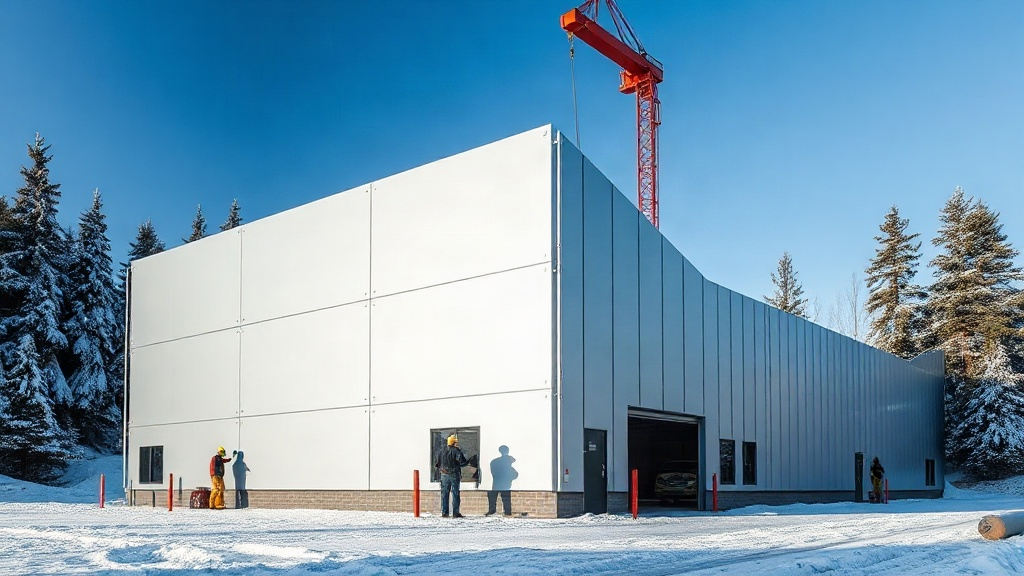
When you're building in Canada, you quickly learn that insulation isn't just a nice-to-have; it's the difference between a comfortable, energy-efficient structure and one that bleeds heat all winter. Among the many options, EPS insulation has quietly become a go-to for builders who want reliable performance without breaking the bank. But there's more to the story: when EPS is combined with structural facings to create sandwich panels, you get a building solution that's fast, durable, and remarkably efficient. In this guide, we'll unpack what makes sandwich panels Canada builders trust, how insulated roof panels fit into the picture, and what you need to know before specifying them for your next project.
What Is EPS Insulation and Why Does It Matter in Canada?
EPS, or expanded polystyrene, is a rigid foam insulation made from tiny beads of polystyrene resin that are expanded with steam and molded into blocks or sheets. It's lightweight, cost-effective, and boasts a consistent R-value of about R-4 per inch. In Canada's varied climate, from the biting cold of the Prairies to the damp chill of the Maritimes, that consistent thermal performance is crucial. Unlike some insulation types that lose efficiency when wet, EPS maintains its R-value even in humid conditions, and it doesn't absorb water readily. That means your walls and roof stay dry and your heating bills stay lower.
But EPS isn't just about thermal resistance. It's also an environmentally sensible choice. Many EPS products now contain recycled content, and the material is fully recyclable at the end of its life. For builders aiming for greener projects, EPS offers a way to reduce embodied carbon while still hitting energy code targets. And because it's manufactured in large blocks, it can be cut into virtually any shape, making it adaptable for custom designs.
The Rise of Sandwich Panels in Canadian Construction
Sandwich panels take the benefits of EPS and multiply them by combining insulation with structural skins. Typically, these panels consist of an insulating core (often EPS, but sometimes polyurethane or mineral wool) bonded between two facings, such as steel, aluminum, or even plywood. The result is a composite panel that's strong, lightweight, and ready to install. In Canada, where construction seasons are short and labor costs are high, sandwich panels have become a favorite for their speed of assembly. A crew can enclose a building in days rather than weeks, which translates to real savings.
When we talk about sandwich panels Canada projects, we're often referring to applications like cold storage warehouses, agricultural buildings, commercial roofs, and even residential walls. The panels arrive prefabricated, so there's minimal on-site cutting and fitting. That precision reduces waste and ensures a tight building envelope, which is critical for meeting Canada's increasingly stringent energy codes, such as the National Energy Code for Buildings (NECB).
Types of Sandwich Panels
- Insulated roof panels: These are designed for roofing applications and often feature profiled steel facings for weather resistance and structural strength. They're common in commercial and industrial buildings.
- Wall panels: These provide a finished interior and exterior surface, often with concealed fasteners for a clean look. They're used in warehouses, retail spaces, and even modern homes.
- Cold storage panels: Engineered for temperature-controlled environments, these panels have thicker cores and specialized joints to prevent thermal bridging.
Why Insulated Roof Panels Are a Game-Changer
Roofs are where buildings lose the most heat, and in Canada, that can mean significant energy waste. Insulated roof panels address this head-on by integrating insulation and roofing into a single component. Unlike traditional roofing where insulation is installed separately beneath a membrane, these panels have the insulation factory-bonded to the underside of the roof skin. This eliminates gaps and thermal bridging, which are common weak points in conventional roofs.
From a construction standpoint, insulated roof panels streamline the process. They can span long distances, reducing the need for purlins and structural supports. That means fewer materials, less labor, and a faster close-in time. For building owners, the benefits continue long after installation: lower heating and cooling costs, fewer drafts, and a more comfortable indoor environment. Plus, because the panels are prefabricated, they often come with warranties that cover both thermal performance and weathertightness.
Key Benefits of EPS Sandwich Panels
So why choose EPS as the core for your sandwich panels? Here are the standout advantages:
- Energy efficiency: EPS provides reliable R-values, helping you meet and exceed energy codes.
- Moisture resistance: EPS doesn't absorb water, so it won't degrade or lose performance in wet conditions.
- Cost-effectiveness: EPS is generally less expensive than polyurethane or mineral wool, making it a budget-friendly option.
- Lightweight: Easier to handle and install, reducing transportation costs and on-site labor.
- Versatility: Can be manufactured in various thicknesses and densities to suit different structural and thermal requirements.
- Environmental: Recyclable and often made with recycled content, EPS aligns with sustainable building practices.
Applications Across Canadian Industries
EPS sandwich panels are not a one-size-fits-all solution, but they adapt to many sectors. In agriculture, they're used for poultry barns and livestock facilities where controlled environments are essential. In food processing, cold storage panels keep temperatures stable and hygienic. For commercial buildings, insulated roof panels provide durable, low-maintenance roofing that can handle snow loads and temperature swings. Even residential builders are turning to sandwich panels for energy-efficient homes, especially in remote areas where traditional construction is costly.
One notable trend is the use of EPS sandwich panels in modular construction. Because the panels are prefabricated, they lend themselves perfectly to modular buildings that are assembled off-site and then transported. This approach cuts construction time and ensures consistent quality, which is a big plus in Canada's challenging climate.
Installation Tips and Best Practices
Installing EPS sandwich panels correctly is key to reaping their benefits. Here are some practical tips from experienced Canadian builders:
- Plan for thermal bridging: Use proper gaskets and sealants at joints to prevent heat loss.
- Handle with care: Although EPS is durable, the facings can dent or scratch. Store panels on edge and avoid dragging them.
- Follow manufacturer guidelines: Each panel system has specific fastening and sealing requirements. Don't improvise.
- Consider snow loads: In Canada, roof panels must be engineered to withstand heavy snow. Consult a structural engineer.
- Ensure proper ventilation: While EPS resists moisture, good ventilation in the building envelope prevents condensation issues.
Frequently Asked Questions
What is the R-value of EPS sandwich panels?
The R-value depends on the thickness of the EPS core. Typically, EPS provides about R-4 per inch, so a 4-inch core would give around R-16. However, the overall R-value of the panel also depends on the facings and any thermal bridging. Always check the manufacturer's published data for specific values.
Are EPS sandwich panels suitable for Canadian winters?
Absolutely. EPS maintains its thermal performance in cold temperatures and is resistant to moisture, which is important during freeze-thaw cycles. Many Canadian builders use EPS sandwich panels for cold storage and agricultural buildings where temperature control is critical.
How do insulated roof panels compare to traditional roofing?
Insulated roof panels offer faster installation, better thermal performance, and fewer thermal bridges. Traditional roofing requires separate insulation and weatherproofing layers, which can be more labor-intensive and prone to gaps. Insulated roof panels provide a monolithic solution that is both structural and insulating.
Can EPS sandwich panels be used for residential homes?
Yes, they can. While more common in commercial and industrial buildings, EPS sandwich panels are increasingly used in residential construction, especially for energy-efficient homes and modular builds. They can be finished with various interior and exterior claddings to suit residential aesthetics.
What about fire performance?
EPS contains flame retardants, but it is still combustible. Building codes in Canada have specific requirements for fire safety, especially in high-occupancy buildings. In many cases, sandwich panels with EPS cores can be used when combined with proper fire barriers or when the building is equipped with sprinklers. Always consult local codes and fire professionals.
Choosing the right insulation and panel system is a decision that impacts your project's performance, timeline, and budget. EPS insulation and sandwich panels offer a compelling combination of efficiency, durability, and value. Whether you're planning a cold storage facility, a commercial roof, or an energy-efficient home, understanding these materials will help you make informed choices. For more information tailored to Canadian projects, explore the resources and expertise available at EPS Insulation Canada.