
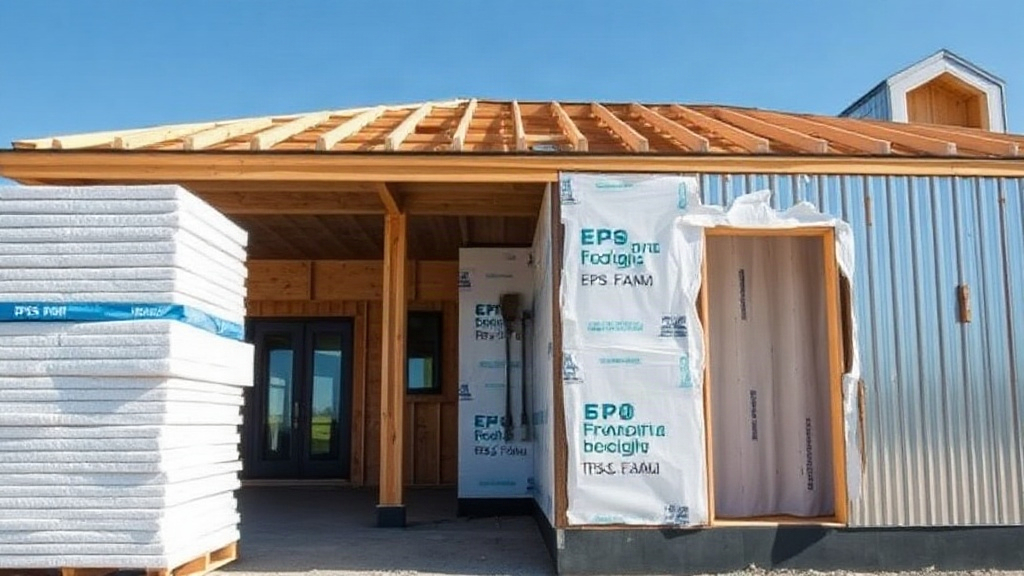
When you're planning a building project in Canada, whether it's a new home, a commercial warehouse, or an agricultural shed, you'll quickly encounter two popular insulation options: EPS insulation and sandwich panels canada. Both promise energy efficiency, but they serve different purposes and come with distinct advantages. Understanding these differences is key to making an informed decision that saves you money and keeps your building comfortable year-round.
In this article, we'll break down what each option is, how they perform, and where they're best applied. By the end, you'll have a clear picture of which insulation strategy fits your project.
What Is EPS Insulation?
EPS insulation stands for Expanded Polystyrene insulation. It's a rigid foam board made from polystyrene beads that are expanded and molded into various shapes and sizes. You've probably seen it in packaging, but in construction, it's a versatile insulation material used in walls, roofs, and foundations.
EPS works by trapping air within its closed-cell structure, slowing down heat transfer. It's lightweight, easy to cut, and resistant to moisture, which makes it a favorite among Canadian builders dealing with harsh weather.
Advantages of EPS Insulation
- Cost-effective: EPS is one of the most affordable insulation options on the market.
- Versatile: It can be used in almost any part of a building envelope.
- Moisture-resistant: It doesn't absorb water, so it maintains its R-value even in damp conditions.
- Eco-friendly: EPS is recyclable and contains no CFCs or HCFCs.
However, EPS has its limitations. It offers a lower R-value per inch compared to some other foams, and it needs to be protected from UV exposure and physical damage. That's where sandwich panels come in.
What Are Sandwich Panels?
Sandwich panels canada are composite building materials made of two outer skins (usually metal) bonded to a rigid foam core, often EPS, polyurethane, or mineral wool. These panels are prefabricated and used primarily for walls and roofs in commercial, industrial, and residential construction.
The beauty of sandwich panels is that they combine insulation and structure in one product. They're quick to install, provide excellent thermal performance, and give a clean, finished look.
Benefits of Sandwich Panels
- Fast installation: Panels are prefabricated and simply lock together, reducing labor time.
- Superior insulation: The foam core provides high R-values, and there are no thermal bridges.
- Durable: The metal skins protect the core from moisture, pests, and impact.
- Aesthetic: Available in various colors and profiles, they offer a modern appearance.
Sandwich panels are often used for cold storage, clean rooms, and large-span buildings. But they might be overkill for a small residential project.
EPS Insulation vs. Sandwich Panels: Key Differences
Let's compare these two options across several factors.
Thermal Performance
EPS insulation typically has an R-value of about 3.8 to 4.4 per inch. A 4-inch EPS board gives you around R-16. Sandwich panels canada with an EPS core can achieve similar R-values per inch, but because the panels are thicker (often 4 to 6 inches), they can reach R-20 to R-30 or more. Plus, sandwich panels eliminate thermal bridging because the metal skins are separated by the foam core.
Cost
EPS insulation is generally cheaper per square foot than sandwich panels. If you're on a tight budget and can handle the additional framing and finishing, EPS boards are a cost-effective choice. Sandwich panels cost more upfront, but they can reduce labor and construction time, potentially saving money overall.
Installation
EPS insulation requires a substrate (like studs or masonry) and a covering (drywall, siding, etc.). Installation is straightforward but labor-intensive. Sandwich panels are installed as a single unit, often with concealed fasteners, making them faster to put up. However, they require precise measurement and may need specialized equipment.
Applications
EPS insulation is ideal for retrofits, residential walls, foundations, and roofs where you want to add insulation without changing the structure. Sandwich panels are perfect for new commercial buildings, agricultural facilities, and any project where speed and a finished appearance are priorities.
Insulated Roof Panels: A Special Case
When it comes to roofs, insulated roof panels are a game-changer. These are a type of sandwich panel specifically designed for roofing. They combine a metal roofing skin with an insulating core, providing both weather protection and thermal insulation in one product.
Insulated roof panels are popular in Canada because they can handle heavy snow loads and temperature fluctuations. They're often used on commercial buildings, but also on homes with flat or low-slope roofs. If you're building a new home, using insulated roof panels can simplify your roof assembly and improve energy efficiency.
Compared to traditional roof insulation (like EPS boards between rafters), insulated roof panels offer better airtightness and moisture control. They also reduce the risk of ice damming, a common problem in Canadian winters.
Which Should You Choose?
The decision depends on your project's specific needs.
Choose EPS insulation if:
- You're retrofitting an existing building.
- You have a limited budget.
- You need insulation for irregular shapes or foundations.
- You're comfortable with a multi-step installation process.
Choose sandwich panels canada if:
- You're building a new commercial or industrial structure.
- You want fast installation and a finished look.
- You need high thermal performance and airtightness.
- You're constructing a cold storage or clean room facility.
For roofs specifically, consider insulated roof panels for their integrated approach to insulation and weatherproofing.
Frequently Asked Questions
Can I use EPS insulation in a sandwich panel?
Yes, EPS is a common core material for sandwich panels. It offers good thermal performance at a lower cost than polyurethane or mineral wool. Many sandwich panels canada manufacturers offer EPS-core panels as a budget-friendly option.
What is the R-value of insulated roof panels?
The R-value depends on the core thickness and material. For EPS-core insulated roof panels, you can expect R-values ranging from R-15 to R-30 for thicknesses of 4 to 8 inches. Polyurethane cores can achieve higher R-values per inch.
Are sandwich panels suitable for residential homes?
Absolutely. While more common in commercial buildings, sandwich panels canada are increasingly used in residential construction, especially for modern designs, garages, and additions. They provide excellent insulation and a sleek appearance.
How does EPS insulation compare to spray foam?
EPS insulation is less expensive and easier to install than spray foam. However, spray foam expands to fill gaps and can provide a higher R-value per inch. For large flat areas, EPS is often more practical; for tricky spaces, spray foam may be better.
Can I install insulated roof panels over an existing roof?
Yes, insulated roof panels can be installed over existing roofs, but it's important to ensure the structure can handle the additional weight. It's often done in commercial retrofits to improve energy efficiency without a full tear-off.
Ultimately, both EPS insulation and sandwich panels canada have their place in Canadian construction. By understanding your project's requirements, you can select the option that delivers the best performance and value.