
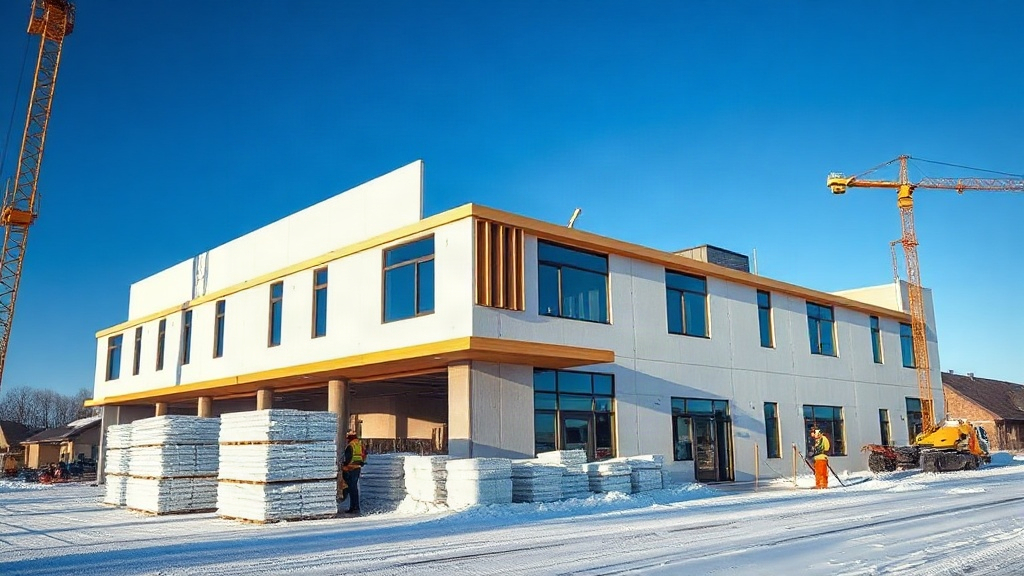
When planning a construction or renovation project in Canada, one of the most critical decisions you will make is how to insulate and clad your building. Two popular options often come up in discussions: EPS insulation and sandwich panels canada. While both serve to improve energy efficiency and building performance, they are not interchangeable. Understanding their differences, advantages, and ideal applications can save you time, money, and future headaches. In this article, we will explore both solutions in depth, helping you choose the right one for your specific needs.
What Is EPS Insulation?
EPS insulation, or Expanded Polystyrene insulation, is a rigid foam board made from expanded polystyrene beads. It is lightweight, cost-effective, and widely used in residential, commercial, and industrial construction across Canada. EPS works by trapping air within its closed-cell structure, creating a barrier that resists heat flow. It is commonly installed in walls, roofs, and foundations.
Key Benefits of EPS Insulation
- Excellent thermal performance: EPS has a stable R-value, typically around R-4 per inch, which does not degrade over time.
- Moisture resistance: It does not absorb water, preventing mold and rot.
- Cost-effective: EPS is one of the most affordable insulation materials on the market.
- Versatile: It can be cut to fit almost any shape or size, making it ideal for retrofits and custom designs.
- Environmentally friendly: EPS is 100% recyclable and contains no HCFCs or formaldehyde.
Where EPS Insulation Excels
EPS insulation is particularly effective in below-grade applications, such as foundation walls, where moisture is a concern. It is also a go-to choice for exterior wall insulation under siding, and for insulating concrete slabs. Because it is lightweight, it is easy to handle and install, reducing labor costs. In Canada's harsh climate, EPS provides reliable thermal protection, helping to prevent heat loss and reduce energy bills.
What Are Sandwich Panels?
Sandwich panels canada refers to prefabricated panels consisting of an insulating core bonded between two rigid facings, such as metal, plywood, or oriented strand board (OSB). The core can be made of EPS, polyurethane, or other insulation materials. These panels are used for walls, roofs, and floors, offering both insulation and structural support in one product.
Advantages of Sandwich Panels
- Fast installation: Panels arrive ready to assemble, significantly reducing construction time.
- Structural integrity: The facings provide strength, often eliminating the need for additional framing.
- Thermal efficiency: The continuous insulation core minimizes thermal bridging.
- Aesthetic options: Facings can be finished with various colors and textures.
- Durability: Resistant to weather, pests, and decay when properly maintained.
Common Applications for Sandwich Panels
Sandwich panels are frequently used in commercial and industrial buildings, cold storage facilities, and modular construction. They are also popular for agricultural buildings and temporary structures. In Canada, they are valued for their ability to withstand extreme temperatures and snow loads. For projects requiring quick turnaround and high insulation values, such as warehouses or retail spaces, sandwich panels are an excellent choice.
EPS Insulation vs. Sandwich Panels: A Head-to-Head Comparison
To make an informed decision, let's compare these two options across several key factors.
Thermal Performance
Both EPS insulation and sandwich panels offer excellent thermal resistance. EPS insulation typically has an R-value of 4 per inch, while sandwich panels with an EPS core achieve similar values, but the overall panel thickness and facing material can affect performance. Sandwich panels with polyurethane cores may have higher R-values per inch. However, for most applications, both provide sufficient insulation when correctly sized.
Installation and Labor
EPS insulation is installed on-site, requiring cutting and fitting around obstacles. It is labor-intensive but allows for customization. Sandwich panels are prefabricated and simply fastened together, often with tongue-and-groove joints. This can drastically reduce installation time and labor costs, especially for large buildings. However, sandwich panels require precise planning and may need specialized equipment for lifting.
Cost Considerations
EPS insulation is generally less expensive per square foot than sandwich panels. However, when you factor in the cost of additional framing, sheathing, and labor, sandwich panels can be cost-competitive, particularly for large-scale projects. For small or complex projects, EPS may be more economical. It's essential to get quotes for both options based on your specific project scope.
Moisture and Durability
EPS insulation is inherently moisture-resistant and does not support mold growth. Sandwich panels, depending on the facing material, may be susceptible to moisture if edges are not sealed properly. Metal-faced panels are highly durable and weather-resistant, while wood-faced panels require protection. In Canada's freeze-thaw cycles, proper detailing is crucial for both.
Design Flexibility
EPS insulation can be easily cut and shaped on-site, making it ideal for renovations and irregular geometries. Sandwich panels are modular and best suited for standard rectangular designs. While custom panels are available, they come at a premium. If your project involves curves or unique architectural features, EPS might be more adaptable.
Which One Should You Choose?
The right choice depends on your project's priorities. If you need a cost-effective, versatile insulation solution for a retrofit or custom home, EPS insulation is likely your best bet. If you are constructing a large commercial building, warehouse, or cold storage facility and want rapid installation with integrated structure and insulation, sandwich panels canada offers a compelling package. Another factor is insulated roof panels, which are a type of sandwich panel specifically designed for roofs. They provide superior thermal performance and are often used in conjunction with wall panels.
Frequently Asked Questions
Can I use EPS insulation in a sandwich panel?
Yes, EPS is a common core material for sandwich panels. It offers good thermal insulation at a lower cost compared to polyurethane or polyisocyanurate cores. However, EPS has a lower R-value per inch, so panels may need to be thicker to achieve the same performance.
Are sandwich panels suitable for Canadian winters?
Absolutely. Sandwich panels are engineered to withstand extreme weather, including heavy snow and freezing temperatures. Metal-faced panels, in particular, are durable and weather-resistant. Proper installation and sealing are key to preventing moisture infiltration.
What is the R-value of insulated roof panels?
The R-value of insulated roof panels varies based on core material and thickness. Panels with polyurethane cores can achieve R-values of R-7 per inch or higher, while EPS cores offer around R-4 per inch. Always check manufacturer specifications for exact ratings.
How do I install EPS insulation on a roof?
EPS insulation is typically installed over a roof deck, followed by a protective membrane and roofing material. It can be mechanically fastened or adhered. For flat roofs, a ballasted system is common. Ensure proper drainage and avoid gaps that could cause thermal bridging.
Are sandwich panels more expensive than traditional construction?
While the upfront cost of sandwich panels may be higher than traditional stick-built construction, the savings in labor, time, and energy efficiency often make them more cost-effective over the life of the building. For large projects, the speed of assembly can lead to significant savings.
Ultimately, both EPS insulation and sandwich panels canada have their place in Canadian construction. By evaluating your project's specific requirements, you can make a choice that balances performance, budget, and timeline. For expert advice tailored to your project, consult with a local insulation specialist.