
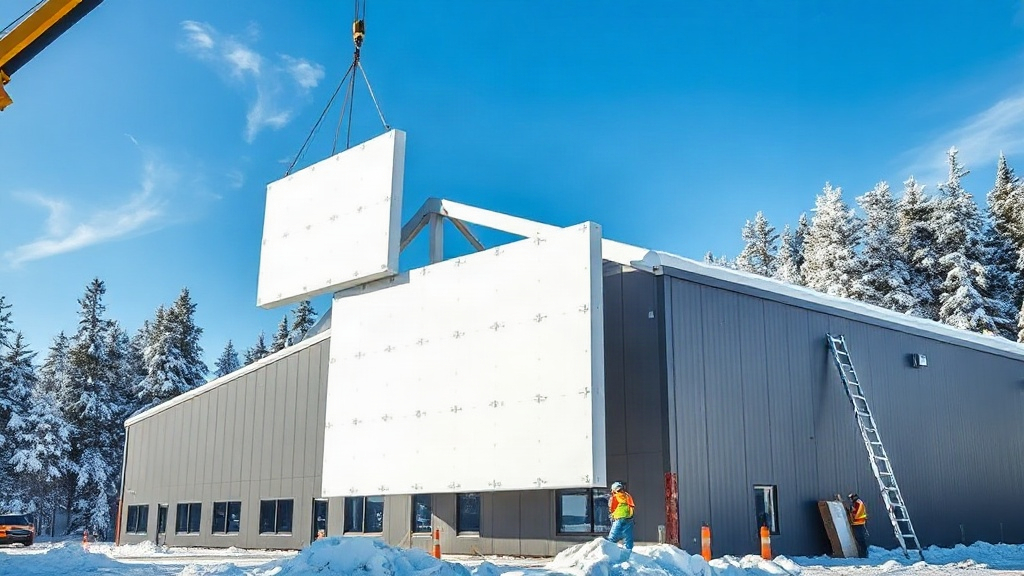
When you're building or renovating in Canada, the battle against the elements is real. From biting winter winds to humid summers, your building envelope has to perform year-round. That's where EPS insulation shines, especially when integrated into sandwich panels. If you're exploring sandwich panels Canada options, understanding how EPS core panels and insulated roof panels work together can save you thousands in energy costs and prevent costly moisture issues. In this guide, we'll break down the technology, the benefits, and the practical considerations so you can make an informed decision for your next project.
What Are Sandwich Panels and Why EPS Insulation Matters
Sandwich panels are composite building elements made of two rigid facings bonded to a lightweight insulating core. The facings can be metal, wood, or cement board, but in most Canadian construction, you'll see pre-painted steel skins. The core is where the magic happens: it provides thermal resistance, structural rigidity, and sound dampening. Among the various core materials, EPS insulation (expanded polystyrene) is a favourite for its balance of cost, performance, and moisture resistance.
Unlike polyurethane or polyisocyanurate, EPS doesn't rely on blowing agents with high global warming potential. It's also vapour-permeable, which means it can allow incidental moisture to escape rather than trapping it. That's a big deal in Canada, where freeze-thaw cycles can wreak havoc on buildings that can't manage moisture.
The Science Behind EPS Insulation in Canadian Climates
EPS is a closed-cell foam made from tiny polystyrene beads expanded with steam. The result is a rigid board with millions of air pockets that resist heat flow. Its thermal conductivity (R-value) is around R-4 per inch, which is lower than polyiso but stable over time. Unlike some foams that lose R-value as they age, EPS keeps its performance for decades.
In a sandwich panel, the EPS core is typically 2 to 12 inches thick, giving R-values from R-8 to R-48. For Canadian winters, that's crucial. A well-insulated wall or roof can mean the difference between a cozy interior and a skyrocketing heating bill. But it's not just about R-value: airtightness matters too. Sandwich panels with EPS cores create a continuous insulation layer that minimizes thermal bridging, especially when joints are properly sealed.
Moisture Management and Freeze-Thaw Resilience
One of EPS's lesser-known advantages is its ability to handle moisture. Because it's vapour-permeable, it doesn't trap water vapour inside the wall assembly. Instead, it allows the building to dry out. In a climate like Canada's, where walls can get wet from rain or snowmelt and then freeze, this permeability can prevent rot and mould. However, you still need a proper water-resistive barrier and flashing details. EPS alone isn't a waterproofing solution, but it plays well with others.
Insulated Roof Panels: The Overlooked Hero
Roofs take the brunt of Canadian weather. Sun, snow, hail, and wind all hammer down, and if your roof isn't insulated well, you're paying for it. Insulated roof panels with EPS cores offer a streamlined solution: they combine structure, insulation, and weatherproofing in one product. Instead of layering insulation, sheathing, and membrane on site, you install prefabricated panels that lock together.
These panels are especially popular for commercial and industrial buildings, but they're gaining traction in residential projects too. The benefits include faster installation, fewer thermal bridges, and a clean, modern look. For flat or low-slope roofs, tapered EPS panels can even create drainage slopes without extra materials.
How Insulated Roof Panels Perform in Snow Country
Snow load is a major design consideration in Canada. EPS sandwich panels are engineered to meet local building codes, and their composite nature gives them impressive strength-to-weight ratios. When paired with steel facings, they can span significant distances without sagging. Plus, the insulation keeps the roof deck warm, reducing the risk of ice dams. Ice dams form when heat escapes through the roof, melts snow, and refreezes at the eaves. With continuous EPS insulation, the roof surface stays uniformly cold, so snow melts evenly and drains away.
Why Choose Sandwich Panels Canada?
Canada has a growing number of manufacturers producing sandwich panels with EPS cores. Choosing local has several perks: shorter lead times, compliance with Canadian building codes (like the National Building Code), and support for the domestic economy. But not all panels are created equal. When sourcing sandwich panels Canada wide, look for these features:
- Certified EPS core: Ensure the EPS meets CAN/ULC standards for fire performance and has a proven track record.
- Steel facings: Look for pre-painted steel with a warranty against corrosion, especially if you're in a coastal or industrial area.
- Joint design: Tongue-and-groove or cam-lock joints provide airtightness and structural continuity.
- Code compliance: Verify that the panels have been tested for fire, wind, and snow loads according to Canadian standards.
- Warranty: A reputable manufacturer will offer a warranty on both materials and performance.
It's also wise to ask about the environmental impact. EPS is recyclable, and some manufacturers use recycled content. If sustainability is a priority, inquire about the panel's life cycle assessment.
Installation Tips for Maximum Performance
Even the best panel can underperform if installed incorrectly. Here are some field-tested tips:
- Plan for thermal expansion: Steel facings expand and contract with temperature changes. Leave adequate gaps and use fasteners that allow for movement.
- Seal joints meticulously: Use high-quality sealants and tapes designed for your climate. A continuous air barrier is key to preventing condensation.
- Handle panels with care: EPS cores can be damaged by rough handling. Store panels on edge, not flat, and protect them from moisture before installation.
- Coordinate with other trades: Ensure that electrical and plumbing penetrations are sealed properly. Every hole is a potential leak.
- Inspect after installation: Look for gaps, misaligned joints, or damaged facings. Address issues immediately.
If you're not experienced with sandwich panel installation, hiring a certified installer is worth the investment. Mistakes can be costly to fix and may void warranties.
Comparing EPS to Other Core Materials
EPS isn't the only game in town. Polyurethane (PUR) and polyisocyanurate (PIR) offer higher R-values per inch, which can be advantageous when space is tight. However, they're more expensive and may have environmental trade-offs. Mineral wool cores provide excellent fire resistance and sound absorption but are heavier and more expensive. EPS strikes a balance: it's affordable, moisture-tolerant, and performs well in Canadian conditions. For many projects, it's the Goldilocks choice.
Frequently Asked Questions About Sandwich Panels and EPS Insulation
How long do EPS sandwich panels last?
With proper installation and maintenance, EPS sandwich panels can last 50 years or more. The EPS core is stable and won't degrade, and the steel facings are protected by durable coatings. Regular inspections and minor repairs can extend their life even further.
Can EPS sandwich panels be used in extreme cold?
Absolutely. EPS maintains its R-value in cold temperatures, unlike some other insulations that lose performance. Many Canadian projects in Yukon and Northern Alberta use EPS sandwich panels successfully. Just ensure the panels are rated for your specific temperature range and that sealants are cold-weather compatible.
Are EPS sandwich panels fire-resistant?
EPS contains flame retardants and will not sustain a flame on its own. However, it can melt and contribute to fire spread if exposed to a sustained fire. That's why building codes require proper fire barriers, such as gypsum board or concrete, over foam plastic insulations. When used in accordance with code, EPS sandwich panels can achieve excellent fire ratings.
What is the cost of sandwich panels in Canada?
Costs vary based on thickness, facings, and quantity. On average, you might pay $10 to $30 per square foot installed. EPS core panels are generally at the lower end of that range, making them a cost-effective choice. Always get multiple quotes and consider the long-term energy savings.
Do I need a vapour barrier with EPS sandwich panels?
Because EPS is vapour-permeable, you typically don't need an interior vapour barrier in walls, provided the assembly is designed to dry outward. However, building codes and climate zones vary. Consult a building science professional to determine the best approach for your project.
Choosing the right insulation for your Canadian building is a decision that pays off for decades. By understanding how EPS insulation works in sandwich panels, and how insulated roof panels can simplify your roof assembly, you're better equipped to build a comfortable, efficient, and durable structure. Whether you're a contractor, architect, or DIY enthusiast, the combination of EPS and sandwich panel technology offers a smart path forward in our challenging climate.