
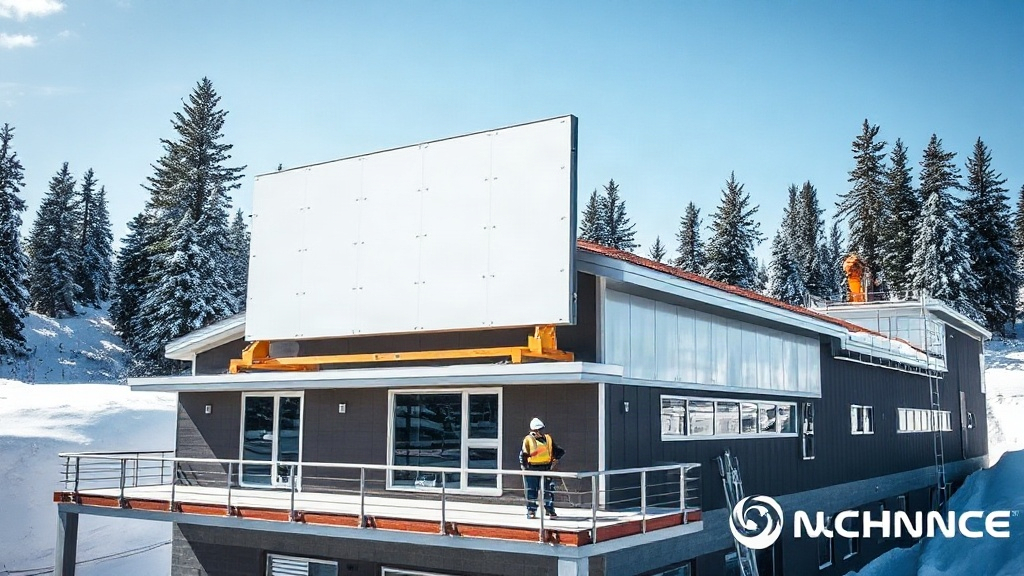
When you think about building in Canada, the first thing that comes to mind is probably the weather. From the biting cold of the Prairies to the damp chill of the Maritimes, Canadian buildings face some of the most demanding conditions in the world. That's why choosing the right insulation isn't just a detail, it's a decision that affects energy bills, comfort, and the lifespan of your structure. Enter EPS insulation and sandwich panels canada wide. These materials are quietly revolutionizing how we build, offering a smart combination of thermal performance, affordability, and resilience. If you're planning a new build, a retrofit, or just curious about modern construction methods, this guide will walk you through what makes EPS insulation and sandwich panels a standout choice for Canadian projects.
Why EPS Insulation Stands Out in Canadian Construction
Expanded polystyrene, or EPS, has been around for decades, but its popularity in Canada has surged as builders look for cost-effective ways to meet increasingly strict energy codes. Unlike some insulation types that rely on blowing agents with high global warming potential, EPS is made mostly of air, about 98% air, trapped in a rigid foam structure. That simple fact gives it impressive insulating power while keeping both cost and environmental impact low.
What really sets EPS apart is its versatility. It can be molded into large blocks, cut into sheets, or integrated into composite panels. It doesn't absorb water, so it won't lose its R-value when exposed to moisture, a common problem in coastal or snowy regions. And because it's lightweight, it's easier and faster to install, which can translate into real savings on labor.
Thermal Performance That Withstands the Cold
EPS insulation typically has an R-value of about R-4 per inch. That might not sound like much compared to polyisocyanurate, but when you factor in cost and the thickness you can achieve, EPS often wins on overall value. In a Canadian winter, where temperatures can plunge below -30°C, every bit of thermal resistance counts. EPS maintains its performance even in extreme cold, unlike some materials that become brittle or lose efficiency.
Moisture Resistance: A Critical Advantage
Moisture is the enemy of insulation. When insulation gets wet, it conducts heat, and that can lead to mold, rot, and structural damage. EPS is closed-cell, meaning water vapor can't easily penetrate it. This makes it ideal for below-grade applications, exterior walls, and of course, roofs. In a country where snow and rain are regular visitors, that moisture resistance is a game-changer.
Sandwich Panels: The Backbone of Modern Canadian Buildings
If EPS is the insulation hero, sandwich panels are the delivery system. A sandwich panel consists of two outer skins, often made of metal or fiberglass, bonded to a core of insulating material like EPS. The result is a strong, lightweight, and highly insulating building component that can be used for walls, roofs, and even floors. In Canada, sandwich panels canada are increasingly specified for commercial, industrial, and agricultural buildings, as well as cold storage facilities and modular structures.
The beauty of sandwich panels lies in their prefabrication. They arrive on site ready to install, which speeds up construction and reduces waste. They also provide a continuous layer of insulation, minimizing thermal bridging, a major source of energy loss in traditional stick-built construction.
Types of Sandwich Panels and Their Applications
Sandwich panels come in various configurations, but for Canadian climates, EPS-core panels are a popular choice. They offer a good balance of insulation, strength, and cost. Other cores include polyurethane (PUR) and polyisocyanurate (PIR), which have higher R-values per inch but come at a higher price. Mineral wool cores are non-combustible and offer excellent fire resistance, often used in high-risk industrial settings.
When selecting a panel, consider the application. For a refrigerated warehouse, you'll want a panel with high R-value and a vapor barrier. For an exterior wall, you might prioritize impact resistance and aesthetics. Roof panels need to handle snow loads and UV exposure, so the skin material and coating matter.
Insulated Roof Panels: The Smart Choice for Canadian Roofs
Roofs are where buildings lose the most heat, and in Canada, that heat loss can lead to ice dams, a costly and dangerous problem. Insulated roof panels solve this by providing a continuous layer of insulation above the deck. They eliminate thermal bridging, reduce the risk of condensation, and can be installed quickly, often in a single layer.
These panels are typically made with a metal skin on both sides and an EPS or PIR core. They come in various profiles, including standing seam and corrugated, to suit different architectural styles. For flat roofs, tapered panels can be used to create slope for drainage. For pitched roofs, they can be installed over purlins, saving time and materials.
Comparing EPS to Other Insulation Materials
When you're choosing insulation for a Canadian building, it helps to see how EPS stacks up against the competition. Here's a quick comparison:
- EPS vs. XPS (Extruded Polystyrene): XPS has a slightly higher R-value per inch (around R-5) and better moisture resistance, but it's more expensive and has a higher environmental impact due to its blowing agents. EPS is often the better value for most applications.
- EPS vs. Polyurethane (PUR/PIR): PUR and PIR offer higher R-values (R-6 to R-7 per inch) and better fire performance, but they cost significantly more. For many projects, EPS provides sufficient insulation at a fraction of the cost.
- EPS vs. Mineral Wool: Mineral wool is non-combustible and excellent for soundproofing, but it's heavier, more expensive, and has a lower R-value per inch. It's often used where fire resistance is paramount.
- EPS vs. Fiberglass: Fiberglass batts are cheap but require careful installation to avoid gaps and can lose performance if compressed or wet. EPS is rigid and maintains its R-value better in real-world conditions.
Installation Tips for Sandwich Panels and Insulated Roof Panels
Getting the most out of your panels requires proper installation. Here are some practical tips from experienced Canadian builders:
- Plan for thermal expansion: Metal skins expand and contract with temperature changes. Use fasteners that allow for movement and follow the manufacturer's spacing guidelines.
- Seal joints carefully: Even small gaps can let in air and moisture, reducing insulation performance. Use high-quality sealants and tapes designed for your panel type.
- Handle with care: While panels are durable, they can be damaged during transport and installation. Store them on edge, not flat, and avoid dropping them.
- Consider condensation control: In cold climates, warm moist air from inside can condense on cold surfaces. Ensure proper vapor barriers and ventilation.
- Work with experienced installers: Sandwich panels are not difficult to install, but they require precision. Hiring a crew with panel experience can save you time and headaches.
Frequently Asked Questions About Sandwich Panels and EPS Insulation
What is the R-value of EPS insulation?
EPS insulation typically has an R-value of about R-4 per inch. For example, a 4-inch thick EPS panel would provide around R-16. The exact R-value can vary slightly by manufacturer and density.
Are sandwich panels suitable for Canadian winters?
Absolutely. Sandwich panels with EPS cores are designed to perform in cold climates. They resist moisture, maintain their R-value, and can handle snow loads when properly engineered. Many Canadian buildings, from warehouses to hockey arenas, rely on them.
Can insulated roof panels be installed over an existing roof?
Yes, in many cases. Insulated roof panels can be installed over existing roofs, provided the structure can support the additional weight. This is often a cost-effective way to improve energy efficiency without a full tear-off.
How long do sandwich panels last?
With proper installation and maintenance, sandwich panels can last 30 years or more. The metal skins are typically coated to resist corrosion, and the EPS core does not degrade over time.
Are EPS sandwich panels environmentally friendly?
EPS is recyclable and has a lower environmental impact compared to some other insulation materials. It does not use ozone-depleting blowing agents, and its lightweight nature reduces transportation emissions. Many manufacturers also offer panels with recycled content.
Making the Right Choice for Your Canadian Project
Whether you're building a new warehouse in Alberta or retrofitting a barn in Ontario, the combination of EPS insulation and sandwich panels offers a smart, efficient solution. They deliver thermal performance, moisture resistance, and durability, all while keeping costs in check. As energy codes tighten and the demand for sustainable building grows, these materials are only going to become more prevalent.
Before you commit, take the time to consult with suppliers and contractors who understand Canadian conditions. Ask about panel specifications, installation details, and warranty terms. With the right approach, your building will stay warm, dry, and energy-efficient for decades to come.